Raymond Chandler’s The Little Sister – Femme Fatale

I’ve become a big fan of Raymond Chandler’s hard-boiled novels featuring his private eye, Philip Marlowe. I previously reviewed his fourth book, The Lady In The Lake, and The Little Sister, published in 1949, continues Chandler’s bleak and disillusioned perspective on the seamy side of Los Angeles and its surrounding towns.

It opens with Marlowe alone in his office, when a woman calls him on the phone, asking him to find her missing brother. He insists on seeing her in person, which she resists, but eventually gives in. She is Orfamay Quest, and, as Marlowe describes her,

She was a small, neat, rather prissy-looking girl with primly smooth brown hair and rimless glasses.
RAYMOND CHANDLER. The Little Sister (Kindle Locations 229-230). Delphi Classics. Kindle Edition.

She has come all the way out to California from Manhattan, Kansas, because her brother, Orrin – who, she assures Marlowe, would never get into any kind of trouble – stopped sending weekly letters to her and their mother. Marlowe is naturally suspicious of Orfamay’s story, but he agrees to take on her case for twenty dollars.

What follows is a very complicated situation involving mobsters from Cleveland, corrupt cops, Hollywood B-listers, a doctor who supplies them with drugs, and a murderer who likes to kill by stabbing his (or her) victims in the neck with an ice pick. Suffice it to say that no one is particularly innocent and Marlowe’s natural cynicism is fully justified.

And yet, even in the most dangerous and tempting circumstances, Marlowe clings to his code of honor: refusing to take bribes, stating the truth to the police even when it puts himself in danger, and resisting the blandishments of a beautiful Hollywood actress. He knows he won’t get rewarded for his virtue, but like a medieval knight pledged to behave chivalrously, he never gives in.

As in The Lady In The Lake, one of my favorite ingredients of Chandler’s style is his deadpan humor. Here are a few examples:

I got my wallet out and handed him one of my business cards. He read it thoughtfully and tapped the edge against his porcelain crown.
“He coulda went somewhere without telling me,” he mused.
“Your grammar,” I said, “is almost as loose as your toupee.”
“You lay off my toupee, if you know what’s good for you,” he shouted.
“I wasn’t going to eat it,” I said. “I’m not that hungry.”
He took a step towards me, and dropped his right shoulder. A scowl of fury dropped his lip almost as far.
“Don’t hit me. I’m insured,” I told him.
“Oh hell. Just another screwball.” He shrugged and put his lip back up on his face.
RAYMOND CHANDLER. The Little Sister (Kindle Locations 571-577). Delphi Classics. Kindle Edition.

A fat man in sky-blue pants was closing the door with that beautiful leisure only fat men ever achieve. He wasn’t alone, but I looked at him first. He was a large man and wide. Not young nor handsome, but he looked durable. Above the sky-blue gabardine slacks he wore a two-tone leisure jacket which would have been revolting on a zebra. The neck of his canary-yellow shirt was open wide, which it had to be if his neck was going to get out. He was hatless and his large head was decorated with a reasonable amount of pale salmon-colored hair. His nose had been broken but well set and it hadn’t been a collector’s item in the first place.
RAYMOND CHANDLER. The Little Sister (Kindle Locations 1364-1368). Delphi Classics. Kindle Edition.

The boss mortician fluttered around making elegant little gestures and body movements as graceful as a Chopin ending. His composed gray face was long enough to wrap twice around his neck.
RAYMOND CHANDLER. The Little Sister (Kindle Locations 2162-2163). Delphi Classics. Kindle Edition.

And, of course, there are plenty of wonderfully descriptive similes to set the mood:

Her voice was as cool as boarding-house soup.
RAYMOND CHANDLER. The Little Sister (Kindle Location 683). Delphi Classics. Kindle Edition.

She had a low lingering voice with a sort of moist caress in it like a damp bath towel.
RAYMOND CHANDLER. The Little Sister (Kindle Locations 795-796). Delphi Classics. Kindle Edition.

I smelled Los Angeles before I got to it. It smelled stale and old like a living room that had been closed too long.
RAYMOND CHANDLER. The Little Sister (Kindle Locations 1338-1339). Delphi Classics. Kindle Edition.

I took the wrinkles out of my lips and said aloud:
“Hello again. Anybody here needing a detective?”
Nothing answered me, not even a stand-in for an echo. The sound of my voice fell on silence like a tired head on a swansdown pillow.
RAYMOND CHANDLER. The Little Sister (Kindle Locations 2985-2987). Delphi Classics. Kindle Edition.

Either you love this stuff, or you don’t. I think it’s great – despite Marlowe’s world-weariness, he loves LA and the losers who populate its seediest neighborhoods. He knows one man can’t make much difference in the world, but he never gives up trying.

Chandler wrote The Little Sister after he had had some very frustrating experiences as a screenwriter in Hollywood, and his contempt for Tinseltown is as clear as a bell. (Or maybe like “two dead fish in the silt at the bottom of a drained pool”, to borrow a simile!) The plot is difficult to unravel at times, and just when I thought I had things figured out, he throws a curveball to surprise. That said, the ending is very good, and I would rank The Little Sister as one of Chandler’s best.

Willa Cather’s My Antonia: A Love Song for a Bygone America

I’ve been intending to read Willa Cather’s My Antonia for a few years, since my writer and historian friend, Bradley Birzer, raved about it. (You can read his brilliant take on Cather here.) It’s in the public domain, so I had no excuse and downloaded a free copy. And here I have to confess that I regret having waited so long to read it! From the opening sentence, I was captivated by Cather’s clear and succinct prose.

The Antonia of the title is a young Czech woman whom the narrator, Jim Burden, sees on a train heading out to Nebraska in the late 1800s, probably around 1880. Jim is ten years old, both his parents have died, and he is leaving his home in Virginia to live with his grandparents on their farm on the prairie. Antonia Shimerdas is fourteen, and she is traveling with her family – newly arrived to America – who hope to make a new life farming in the same vicinity as the Burden’s. Her family consists of her father, mother, older brother Ambrosch, and her little sister, Yulka. From the start, they are at a disadvantage, because they overpaid for a sod house and land that they hope to farm. Poor Mr. Shimerdas is out of his depth – he was a skilled weaver back in Eastern Europe, but he knows nothing about farming. Ambrosch is a hard worker, but mistrustful and a little devious. Mrs. Shimerdas is very proud and has an extremely difficult time adjusting to their new circumstances. For Antonia, however, life is a grand adventure. She and Jim immediately strike up a friendship, and she quickly picks up English. Her openness and sincere delight in everyone and everything around her are her best qualities.

As I read My Antonia, I was really struck by how important community was to prairie dwellers. During the first winter, a severe snowstorm hits, and Jim’s grandmother, Jim, and their indefatigable hired hand, Otto, brave the elements to bring some food and supplies to the Shimerdas. It’s no exaggeration to say this act of neighborly kindness saves Antonia’s family from starvation.

The prairie itself is a major character in the book. I loved Cather’s vivid descriptions of it in all seasons. Here’s one set in autumn:

All those fall afternoons were the same, but I never got used to them. As far as we could see, the miles of copper-red grass were drenched in sunlight that was stronger and fiercer than at any other time of the day. The blond cornfields were red and gold, the haystacks turned rosy and threw long shadows. The whole prairie was like the bush that burned with fire and was not consumed.
(Location 488, Standard Ebooks Edition)

Each chapter is a self-contained vignette that adds up to a powerful and satisfying whole. Jim’s grandparents decide to rent their farm and move to the local town of Black Hawk, so Jim can attend school. Antonia doesn’t go to school, because Ambrosch insists she work on their farm, as well as hire herself out to other farms when they need an extra hand. She is very proud of her ability to do a man’s work, but she regrets not getting a good education.

Grandfather Burden gets Antonia a job keeping house for his neighbors in town, the Harlings, and Antonia thrives there. She helps with the children, the cooking, and the cleaning. She also falls in love with dancing under a big tent that is set up in the town square for that purpose. Jim also enjoys dancing with the girls and Antonia on the weekends. Their friendship deepens as they both grow older, but it never tips over into romance. It comes close, though!

Another important aspect of prairie life was faith. Here’s how the Burden’s celebrate one Christmas:

On Christ­mas morn­ing, when I got down to the kitchen, the men were just com­ing in from their morn­ing chores—the hors­es and pigs al­ways had their break­fast be­fore we did. Jake and Ot­to shout­ed “Mer­ry Christ­mas!” to me, and winked at each oth­er when they saw the waf­fle-irons on the stove. Grand­fa­ther came down, wear­ing a white shirt and his Sun­day coat. Morn­ing prayers were longer than usu­al. He read the chap­ters from St. Matthew about the birth of Christ, and as we lis­tened, it all seemed like some­thing that had hap­pened late­ly, and near at hand. In his prayer he thanked the Lord for the first Christ­mas, and for all that it had meant to the world ev­er since. He gave thanks for our food and com­fort, and prayed for the poor and des­ti­tute in great cities, where the strug­gle for life was hard­er than it was here with us. Grand­fa­ther’s prayers were of­ten very in­ter­est­ing. He had the gift of sim­ple and mov­ing ex­pres­sion. Be­cause he talked so lit­tle, his words had a pe­cu­liar force; they were not worn dull from con­stant use. His prayers re­flect­ed what he was think­ing about at the time, and it was chiefly through them that we got to know his feel­ings and his views about things.
(Location 951, Standard Ebooks Edition)

Life was very hard, yet for most people young Jim came into contact with, there was much joy. People had few possessions, yet they had rich lives. As the quote above makes clear, those living on the prairie considered themselves better off than city dwellers. They were responsible for their own entertainment; for example, Mrs. Harling and her daughters were accomplished pianists who loved to play for people. When a traveling troupe comes to town one summer to offer dancing lessons, all the families flock to them and make it a festive event. I would say the defining feeling of the time was optimism – in a relatively young America everyone had boundless hope and a belief that they could succeed.

In the final section of the book, Jim – who has gotten a law degree and moved to New York City – returns to Nebraska to see if he can find Antonia. He does, and he gives us this tender portrait of her in her middle age:

She was a battered woman now, not a lovely girl; but she still had that something which fires the imagination, could still stop one’s breath for a moment by a look or gesture that somehow revealed the meaning in common things. She had only to stand in the orchard, put her hand on a little crab tree and look up at the apples, to make you feel the goodness of planting and tending and harvesting at last.
(Location 3684, Standard Ebooks Edition)

My Antonia  is deservedly a classic of American literature. As Jim and his friends mature, so does the country, becoming less agricultural and more urban. The pace of life increases, and modernity begins to intrude. My Antonia is a paean to a bygone era of American life when life was fraught with peril, but also held out almost infinite promise. In our own day, it’s common for neighbors on the same street of a city to not know each other at all. In Antonia’s time, everyone knew everyone and felt some responsibility for each other’s welfare. At the close of the first quarter of the twenty-first century, we have so much in terms of material comfort, but we have lost much, as well.

Jerome K. Jerome’s Three Men In A Boat: Hilarious Victorian Misadventures

Jerome K. Jerome’s first book, Three Men in a Boat, was published in 1889, and it is one of the funniest books I’ve ever read. Apparently, it began as a serious travelogue, and there are stretches of relatively boring descriptions of picturesque towns and villages along the Thames river. However, most of the book concerns the trials and tribulations of the narrator, “J”, his two friends, George and Harris, and a dog, Montmorency, as they take a two-week holiday on a small boat up the river.

I love British humor (P. G. Wodehouse is one of my all-time favorite authors), and I can’t believe I am just now discovering Jerome K. Jerome. He has a deadpan style of narration that heightens the absurdity of the situations he and his friends get themselves into. Throughout the book, Jerome drops small jibes that had me constantly chuckling:

We arranged to start on the following Saturday from Kingston. Harris and I would go down in the morning, and take the boat up to Chertsey, and George, who would not be able to get away from the City till the afternoon (George goes to sleep at a bank from ten to four each day, except Saturdays, when they wake him up and put him outside at two), would meet us there.

Jerome’s tale also offers a fascinating glimpse into the habits of vacationing Britishers in the Victorian era. Apparently, it was a common practice to rent a large rowboat, load it up with all kinds of provisions, and head up the Thames for days at a time. To propel the boat, they either sculled (rowed), or used a towline that was pulled by one or two people of the party along a towpath on the bank of the river. in Jerome’s time, steam launches were just coming into use, and he talks about how there was often conflict between the boaters who sculled or towed themselves, and the newfangled motorized boats.

Jerome also uses his narrative to go off on all kinds of tangents, retelling several hilarious stories of his friends’ lives. For example, he talks about a time one of his friends asked him to take home to London a couple of very ripe cheeses. Jerome brought them with him onto the train, and they smelled so awful that no one could stay in the same compartment with him:

From Crewe I had the compartment to myself, though the train was crowded. As we drew up at the different stations, the people, seeing my empty carriage, would rush for it. “Here y’ are, Maria; come along, plenty of room.” “All right, Tom; we’ll get in here,” they would shout. And they would run along, carrying heavy bags, and fight round the door to get in first. And one would open the door and mount the steps, and stagger back into the arms of the man behind him; and they would all come and have a sniff, and then droop off and squeeze into other carriages, or pay the difference and go first.

From Euston, I took the cheeses down to my friend’s house. When his wife came into the room she smelt round for an instant. Then she said:

“What is it? Tell me the worst.”

I said: “It’s cheeses. Tom bought them in Liverpool, and asked me to bring them up with me.”

And I added that I hoped she understood that it had nothing to do with me; and she said that she was sure of that, but that she would speak to Tom about it when he came back.

And here is an excerpt describing how entertaining Harris is at a dinner party. It’s rather long, but it’s so funny I had to include it in its entirety:

I will just give you an idea of Harris’s comic singing, and then you can judge of it for yourself.

Harris (standing up in front of piano and addressing the expectant mob): “I’m afraid it’s a very old thing, you know. I expect you all know it, you know. But it’s the only thing I know. It’s the Judge’s song out of Pinafore — no, I don’t mean Pinafore — I mean — you know what I mean — the other thing, you know. You must all join in the chorus, you know.”

[Murmurs of delight and anxiety to join in the chorus. Brilliant performance of prelude to the Judge’s song in “Trial by Jury” by nervous Pianist. Moment arrives for Harris to join in. Harris takes no notice of it. Nervous pianist commences prelude over again, and Harris, commencing singing at the same time, dashes off the first two lines of the First Lord’s song out of “Pinafore.” Nervous pianist tries to push on with prelude, gives it up, and tries to follow Harris with accompaniment to Judge’s song out “Trial by Jury,” finds that doesn’t answer, and tries to recollect what he is doing, and where he is, feels his mind giving way, and stops short.]

Harris (with kindly encouragement): “It’s all right. You’re doing it very well, indeed — go on.”

Nervous Pianist: “I’m afraid there’s a mistake somewhere. What are you singing?”

Harris (promptly): “Why the Judge’s song out of Trial by Jury. Don’t you know it?”

Some Friend of Harris’s (from the back of the room): “No, you’re not, you chuckle-head, you’re singing the Admiral’s song from Pinafore.”

[Long argument between Harris and Harris’s friend as to what Harris is really singing. Friend finally suggests that it doesn’t matter what Harris is singing so long as Harris gets on and sings it, and Harris, with an evident sense of injustice rankling inside him, requests pianist to begin again. Pianist, thereupon, starts prelude to the Admiral’s song, and Harris, seizing what he considers to be a favourable opening in the music, begins.]

Harris: “ ‘When I was young and called to the Bar.’ ”

[General roar of laughter, taken by Harris as a compliment. Pianist, thinking of his wife and family, gives up the unequal contest and retires; his place being taken by a stronger-nerved man.]

The New Pianist (cheerily): “Now then, old man, you start off, and I’ll follow. We won’t bother about any prelude.”

Harris (upon whom the explanation of matters has slowly dawned — laughing): “By Jove! I beg your pardon. Of course — I’ve been mixing up the two songs. It was Jenkins confused me, you know. Now then.

[Singing; his voice appearing to come from the cellar, and suggesting the first low warnings of an approaching earthquake.]

“ ‘ When I was young I served a term As office-boy to an attorney’s firm.’

(Aside to pianist): “It is too low, old man; we’ll have that over again, if you don’t mind.”

[Sings first two lines over again, in a high falsetto this time. Great surprise on the part of the audience. Nervous old lady near the fire begins to cry, and has to be led out.]

Harris (continuing): “ ‘ I swept the windows and I swept the door, And I—’ No — no, I cleaned the windows of the big front door. And I polished up the floor — no, dash it — I beg your pardon — funny thing, I can’t think of that line. And I — and I — Oh, well, we’ll get on to the chorus, and chance it (sings):

“ ‘ And I diddle-diddle-diddle-diddle-diddle-diddle-de, Till now I am the ruler of the Queen’s navee.’

Now then, chorus — it is the last two lines repeated, you know.

General Chorus: “And he diddle-diddle-diddle-diddle-diddle-diddle-dee’d, Till now he is the ruler of the Queen’s navee.”

And Harris never sees what an ass he is making of himself, and how he is annoying a lot of people who never did him any harm. He honestly imagines that he has given them a treat, and says he will sing another comic song after supper.

I can glean a few interesting facts about entertaining guests in a Victorian home from this passage: first, it seems that guests were happy to volunteer to perform at dinner parties; second, there was no shortage of people who were proficient piano players and familiar with the music of Gilbert and Sullivan; and third, people provided their own entertainment. The popularity of recorded music, then radio, and finally television put an end to that practice, which is a shame.

Jerome, Harris, George, and Montmorency have a generally pleasant and leisurely trip up the Thames, all the way to Oxford. Along the way, Jerome makes humorous observations of local cemeteries, pubs, inns, and other boaters. Montmorency, a fox terrier, tangles with other dogs and the tea kettle. There’s no plot whatsoever, and the intrepid voyagers eventually make it back to London in one piece. If you’re looking for something that is very funny and enjoyable, you couldn’t do much better than Three Men in a Boat. You can download a free digital version here.

Two Different Takes on Jay Gatsby

Fitizgerald’s The Great Gatsby is deservedly a classic of American literature, some even claiming it is the greatest American novel ever written. It’s certainly a personal favorite – I’ve read it several times, and I picked it up to read once again. It was a rainy summer afternoon, and it’s short enough to read in one day. It’s rare that a novel captures an era as completely as Gatsby, and Fitzgerald is an outstanding writer. Every time I read it, I appreciate his talent more.

I was surprised to learn that on its initial release, it wasn’t a big success. In fact, it sold far less than its predecessor, The Beautiful and The Damned, and then sank into oblivion. It wasn’t until WWII that it became the hugely popular novel that it is. The US army was looking for some inexpensive titles it could print up and send to enlisted men, and The Great Gatsby filled the bill. When the soldiers returned home, they talked about a terrific book they read while serving overseas, and enough interest was generated to reignite the novel’s popularity. (You can read a more detailed account of Gatsby’s resurrection here.)

What I love about The Great Gatsby is how Fitzgerald doesn’t waste a single word. It’s the very American tale of a self-made man who is the victim of his naive belief that if he only has enough wealth, he can accomplish anything, to the point of erasing the recent past and reliving it on his terms.

It’s a masterstroke of Fitzgerald that we never really know exactly how Jay Gatsby amassed his enormous fortune – bootlegging, illicit drugs, gambling – who knows? He does acquire a huge mansion on West Egg, Long island, and hosts extravagant parties with one single purpose: to reconnect to his true love: Daisy Buchanan. And here is one of my favorite passages in the novel: when narrator Nick Carraway visits the Buchanan’s (he is Daisy’s second cousin), they sit down to dinner, and Daisy exclaims,

‘Why candles?’ objected Daisy, frowning. She snapped them out with her fingers. ‘In two weeks it’ll be the longest day in the year.’ She looked at us all radiantly. ‘Do you always watch for the longest day of the year and then miss it? I always watch for the longest day in the year and then miss it.’

F. Scott Fitzgerald. The Great Gatsby (Kindle Locations 274-276).

In just a few brief sentences, Fitzgerald indelibly portrays who Daisy is as a person: her aimlessness and superficiality. Her husband, Tom, is a philandering blowhard who quotes the latest “scientific” books he’s read, but he has no idea what he’s talking about. Their friend, Jordan Baker, whom Nick initially falls for, is a semiprofessional golfer who isn’t above cheating when it benefits her game.

Nick, a beginning bond trader, lives next door to Gatsby, and he hangs on to his principles, even when Gatsby offers him a lucrative business opportunity. Carraway turns him down, more interested in being Gatsby’s friend and figuring who he really is beneath the facade. Once Gatsby learns that Nick has a personal connection to Daisy, he asks Nick to help him reconnect with her. His long quest is about to come to fruition!

Unfortunately, that quest involves resetting his and Daisy’s life back to when he first courted her as a young soldier about to go off to Europe in WWI. As far as he’s concerned it’s not too much to ask Daisy to deny that she ever loved Tom and start life anew with him, even though Daisy and Tom have a three-year-old daughter. Nick tries to talk some sense to Gatsby,

‘I wouldn’t ask too much of her,’ I ventured. ‘You can’t repeat the past.’

‘Can’t repeat the past?’ he cried incredulously. ‘Why of course you can!’

He looked around him wildly, as if the past were lurking here in the shadow of his house, just out of reach of his hand.

‘I’m going to fix everything just the way it was before,’ he said, nodding determinedly. ‘She’ll see.’

F. Scott Fitzgerald. The Great Gatsby (Kindle Locations 1489-1493).

If you haven’t read The Great Gatsby, do yourself a favor and pick it up! It’s a devastating indictment of the idle rich and the bubble they live in. Nick observes near the end of the story,

They were careless people, Tom and Daisy — they smashed up things and creatures and then retreated back into their money or their vast carelessness, or whatever it was that kept them together, and let other people clean up the mess they had made . . .

F. Scott Fitzgerald. The Great Gatsby (Kindle Locations 2368-2370).

As I mentioned, it’s relatively short, and every word counts. It has been adapted to film several times, the two most significant are one in 1974 starring Robert Redford as Gatsby and Mia Farrow as Daisy, and the other from 2013 starring Leonardo DiCaprio and directed by Baz Luhrmann. The former is one of the most faithful adaptations of a novel I’ve ever seen, with every character perfectly cast. The Luhrmann one is obnoxious to my tastes, featuring contemporary hip hop music and an unsettling, disjointed film technique. Snatches of dialogue come and go and are lost in the din of the noisy soundtrack.

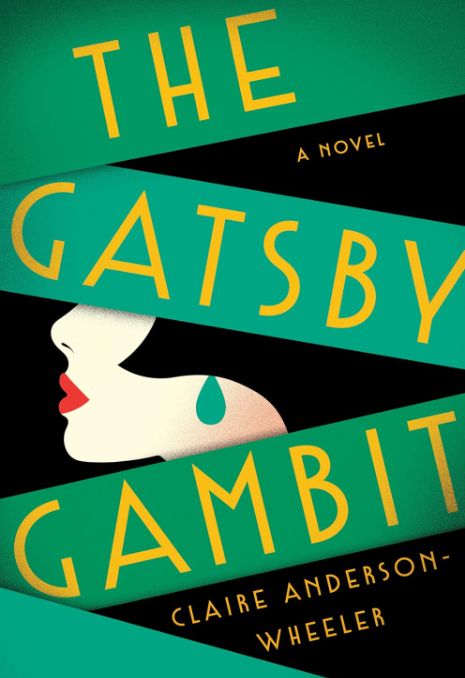
The title of this post is “Two Different Takes on Jay Gatsby”, and I wasn’t referring to the movies. Viking has just published The Gatsby Gambit by Claire Anderson-Wheeler, which is set in the same time and place as Fitzgerald’s novel, and features the same characters. However, that’s where any resemblance to The Great Gatsby ends. In The Gatsby Gambit, Jay Gatsby’s little sister, Greta, is the main character as she sets out to solve the mystery of Tom Buchanan’s death. Since Tom doesn’t die in The Great Gatsby, it’s clear that The Gatsby Gambit is not a sequel and doesn’t pretend to be. Rather it’s a nice little mystery, where we get to see the lives of the servants who work for Jay Gatsby, and how they are treated. Greta is a likeable character who has just returned from the “finishing school” Jay has sent her, and she is soon thrust into a situation where everyone around her could credibly be Tom’s murderer. Jay himself is portrayed as a man who came by his wealth honestly. Tom is worse than ever, and Anderson-Wheeler introduces us to his brother Edgar, who is even less attractive. Jordan and Nick stay fairly true to form, and Daisy is still mostly concerned with material things.

Once I realized that is wasn’t Anderson-Wheeler’s intention to write a sequel to Fitzgerald’s masterpiece (and, truth be told, who would want to?), I was able to relax and enjoy her tale. It will never be considered a classic, but it’s definitely an entertaining read, especially for readers familiar with The Great Gatsby.